Coastal loops, waterfall walks, and hill hikes – all within easy reach of Serenity 22 Barend

We love the walking and hiking near Serenity 22 and in Dumfries & Galloway.
From gentle strolls to more strenuous hikes, there’s rewarding scenery every time! The Colvend Coast alone has enough variety to fill a week: tide-dependent beach routes, clifftop paths with Solway views, wooded gorge walks, and hill climbs with the Lake District visible on a clear day. Further afield, the Galloway Forest Park opens up longer, quieter routes through one of the least-visited landscapes in Scotland.
Many of the walks below are ones we’ve done ourselves. We’ve added distance, difficulty notes, and links to our reviews and full guides where we have them.
Quick info:
- Tide-dependent walks: Some (e.g. Portling Bay Coastal Loop, Mares Braids) require low tide – check times before setting off
- Difficulty ratings: follow AllTrails gradings – Easy, Moderate, Hard.
- Dogs: Welcome on most routes – leads required near livestock and during bird ground nesting season (Apr – Jul)
- Right to roam: Scotland’s Land Reform Act 2003 gives access to most land – see access notes below
- Resources: AllTrails – Dalbeattie & Colvend | Dalbeattie & Colvend walks PDF
Walks from Serenity’s Front Door
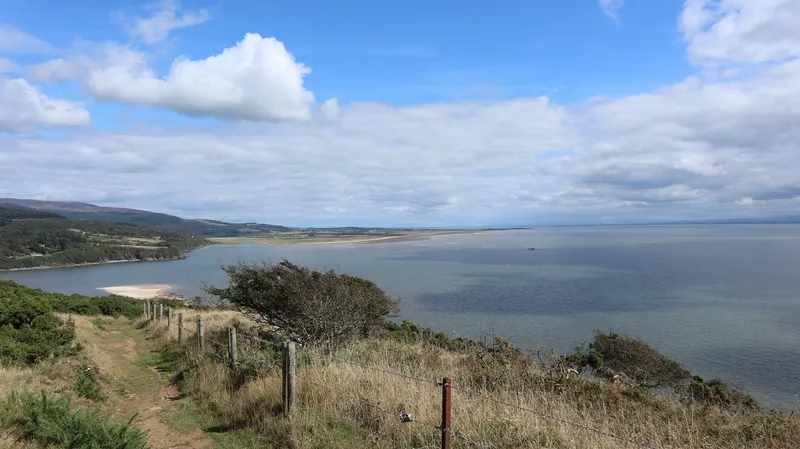
The Portling Bay Coastal Loop
5.6km – 1.5 to 2 hours – Moderate – Tide dependent ⚠️
Along Sandyhills Beach to Portling Bay via the Needle’s Eye rock arch, returning along the clifftop coastal path. One of the best walks in the area – the beach section requires low tide. Full guide →
Mares Braids Waterfall
2.25 km loop from parking; 9 km loop from Serenity 22 – Moderate (Muddy/Streams to cross) – Tide dependent ⚠️
A woodland gorge walk to the Back Burn waterfall. The short loop from the parking spot suits most abilities, but requires wellies! The full 9km loop from the lodge adds a road section each way – a proper half-day out.
Coastal Walks – a Short Drive from the Lodge
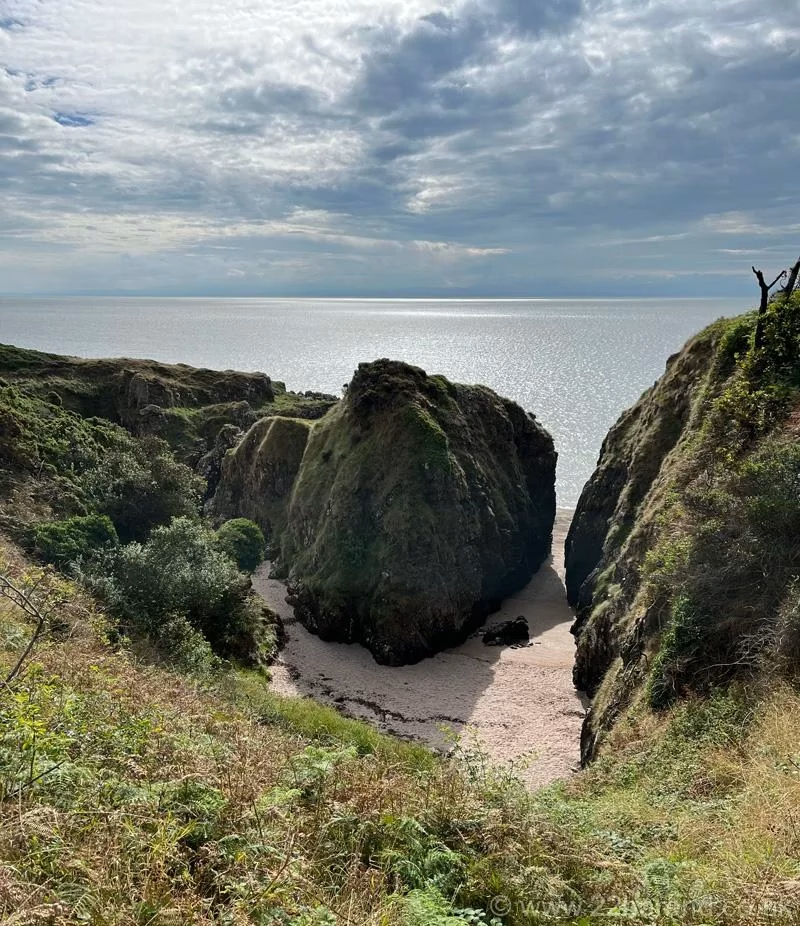
Coastal Walk Sandyhills to Rockcliffe
9km to Rockcliffe / 11km to Kippford – Moderate to Hard – Some tide-dependent sections ⚠️ but can be avoided by retracing steps
One of the finest coastal walks in Britain. Clifftop paths with Solway views, the Needle’s Eye arch, and the option to finish at Rockcliffe or continue to Kippford. The 372A bus runs between Dalbeattie and Rockcliffe – catch it one way to halve the return.
Walk from Kippford to Rough Island
7km there and back – Easy – Tide dependent ⚠️
A low-tide causeway walk to a small NTS island nature reserve off Kippford. Walkers are discouraged during bird nesting season (the busiest time for nesting birds is from 1st March until 31st July). Start or finish with refreshements in Kippford at The Ark or The Anchor.
Mersehead RSPB Reserve
4.7km circular – Easy – 15 min drive
Through the Mersehead reserve – woodland, sand dunes, mudflats and a beach section. We spotted a barn owl in flight on our first visit. Barnacle geese arrive in October and stay through winter – an exceptional sight and sound. Read our review →
Hill Walks and Forest Routes
Criffel
6 km – you don’t need to take the detour shown on the AllTrails walk – Moderate to Hard – 20 min drive
The most prominent hill on the Solway shore at 569m. A clear day gives views across to the Lake District, Isle of Man, and Northern Ireland. A steady climb on good paths – no scrambling required. Allow 2 to 3 hours.
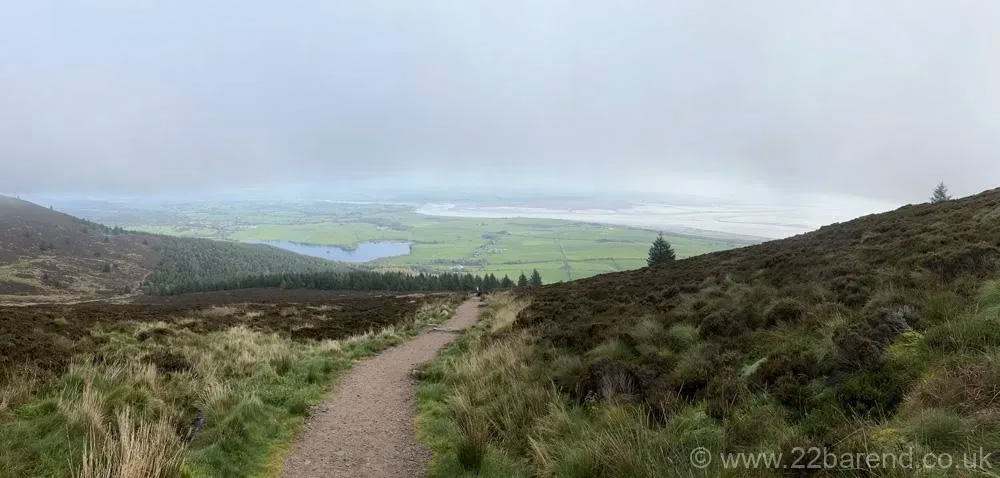
Dalbeattie Town Wood
Various lengths (1.6 – 3.7km) – Easy – 10 min drive
Quiet forest routes through the woods to the with a mix of trail, forestry and cycle tracks. Good for a half-day out when the coastal paths are too exposed. Plantain Loch and the Heart Stane are highlights.
Clatteringshaws Loch
Various routes – Easy to Moderate – 50 min drive
This beautiful place sits in the heart of Galloway Forest Park. Good base for shorter walks with big forest views. We’ve visited many times. Please note that the visitor centre is currently closed (Sep 2026), but there is parking. Read our review →
Grey Mare’s Tail and Loch Skeen
~5km – Moderate to Hard – 1 hour drive
One of Scotland’s most dramatic waterfalls, with an optional extension to Loch Skeen above. Further from the lodge but worth a day trip – pairs well with a stop in Moffat.
More Walks to Explore
- Waterloo Monument Circular (3.7 km)
- Threave Garden & Estate, Castle Douglas
- Threave Gardens to Threave Castle (7km there and back)
- Circular walk around Carlingwark Loch and through Kelton
- Screel Hill (5.5 km)*
- New Abbey Circular (12.4 km)*
- Merrick (12.7 km)*
- Lotus Hill Circular (5.5 km)*
- White Coomb and Loch Skeen (7.6 km)*
- Loch Ken
- Corserine (12.9 km)*
- Cairnsmore of Carsphairn and Black Shoulder (11.9 km)*
- Colt Hill/Benbrack Arch (9.2 km)*
*These are on our list for future visits – we’ll add our own notes as we do them.
Serenity 22 is the starting point for all of this
A 10-minute walk to the beach, the Portling loop from the front door, and many of these walks within a 30-minute drive. The lodge sleeps 2-8 with free sauna and pool access for after the hike.
Occupancy-based pricing for smaller groups.
Planning Your Walk – Useful Links
- Forestry and Land Scotland > Dalbeattie > Walking trails
- Walking in and around Dalbeattie & Colvend (Dumfries & Galloway, Scotland) PDF
- Dalbeattie Walks on dalbeattie.org
- Best Trails in Dalbeattie on AllTrails – you may need to register (free)
Walking in Scotland – Your Rights
Since 2003, you have the right to walk on nearly all land in Scotland, provided you follow the Scottish Outdoor Access Code. These access rights were established by the Land Reform (Scotland) Act 2003. However, you only have access rights if you exercise them responsibly.
The Scottish Outdoor Access Code has three main principles:
- Respect the interests of other people
- Care for the environment
- Take responsibility for your own actions.
Areas where access rights do not apply
There are some areas where access rights do not apply, including:
- Private houses, structures and gardens
- Industrial land – like quarries and building sites
- Visitor attractions with admission fees
- Fields with growing crops, but you may use field margins
- Recreational sites such as sports pitches but normally only at times when access rights would interfere
Rights also never extend to prepared surfaces like tennis courts or bowling greens, but you have the right to cross golf courses, avoiding the greens.
Trespass in Scotland
Before the 2003 Act, access was freely taken in Scotland using something called ‘custom and tradition’.
These customary ‘rights’ still apply as long as you’re causing no damage and walking responsibly. So, you may walk on land where statutory rights don’t apply without committing an offence.
This includes places such as farmyards or across dams, but you should still heed local advice, for example to avoid hazardous operations in farmyards.
Access to farms in Scotland
Scottish access rights include responsible access to farmers’ fields.
Avoid damaging the crop by using paths, tracks or unsown ground. If walking in narrow field margins, walk in single file, or consider alternative routes on neighbouring ground.
Access rights do not extend to farmyards, but many people take access through farmyards when following paths and tracks.
If a right of way or ‘core path’ (a route designated by local authorities due to its importance) goes through a farmyard, you can follow this at any time. But if a reasonable alternative route is signposted, you should use it.
If there is no path, you might be able to go through the farmyard if the farmer is content or if access has been taken there in the past. Alternatively, you could use your access rights to go around the farmyard.
If you do go through a farmyard, be careful and respect the privacy of residents.
Where to wild camp in Scotland
You can camp on all land where Scottish access rights apply, provided you follow the Scottish Outdoor Access Code‘s ‘leave no trace’ principles. That means camping in small tents, in small groups and moving on after two or three nights.
Avoid enclosed fields, buildings and historic structures like castles. Use a stove rather than open fires, and carry a trowel to bury human waste at least 30 metres from lochs or burns.
Access rights don’t apply to cars or vans, and you must park legally. The Code suggests avoiding camping next to roads, so carefully consider what is responsible. For example, how visible is your tent and could you move further away?


